Log #13

Picking up from where we left off.
I have now completed my roughly one week-long Upper Rhine Graben field trip. So far, it has been the field trip I enjoyed the most. In general, I still find the geology of Turkey much more interesting. In terms of diversity and preservation, it is on a completely different level. Even just around Ankara, there are places where you can see practically everything you would cover in an entire year of an introductory geology textbook, and even more, in the best possible way. Better still, these things are so consistently well exposed that they are quite literally textbook examples. However, this time I have to admit that I really enjoyed the field trip as a field trip, independent of the geology itself. For the first time, being in the field was not an overwhelming experience for me, mostly because everything was much better organized. If you want to take a look at the “logs” I created throughout the trip—that is, the photos and GPS routes—you can check out the website I made for them here: https://altarcag.github.io/my-field-atlas/urg-2026/
In addition to that, I also want to leave a few nice photos here that have nothing to do with geology.


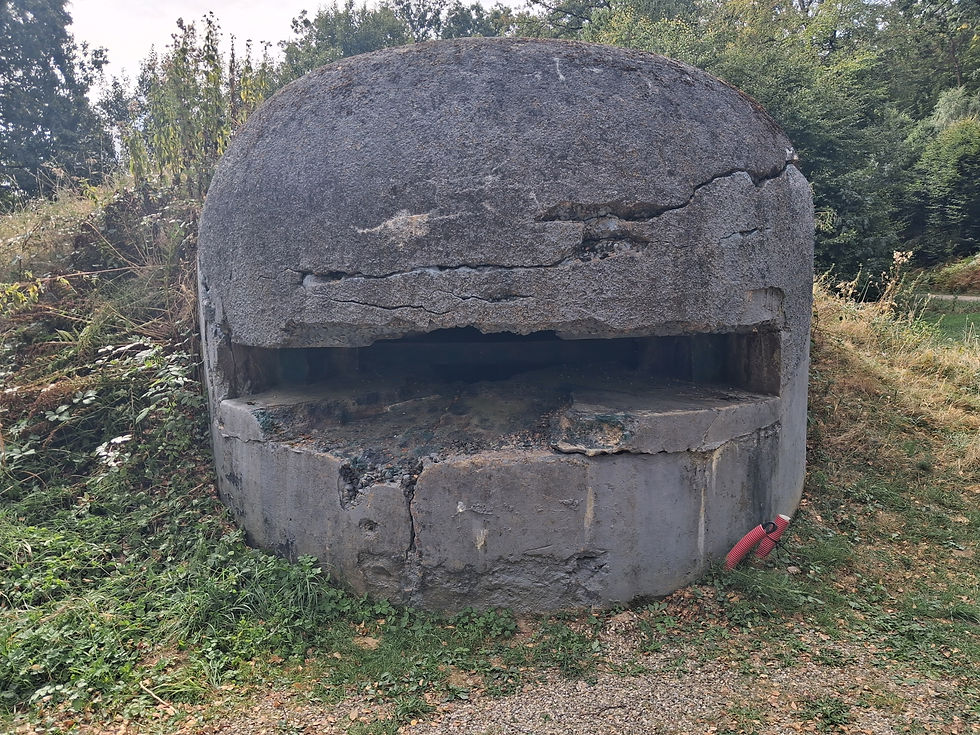

I could say it felt a bit like a vacation. A tiring vacation, of course . Right before the trip, I had also gone to Turkey for about a week. As a result, I had to take roughly two weeks off from being productive. I have a lot of things I need to get done—for example, I need to finish writing my ostracod paper. Although I feel like I'm getting sick again...

I do not think I have ever mentioned it on this blog before, at least not that I can remember: Daniel Kahneman’s Thinking, Fast and Slow. The basic idea of the book is that the human mind operates, roughly speaking, through two different modes of thinking. Kahneman calls them System 1 and System 2. System 1 is fast, automatic, intuitive, and works with very little effort; System 2 is slower, analytical, and requires conscious thought. A large part of the book is essentially devoted to showing that we are nowhere near as rational as we like to think we are. Kahneman explains a whole range of cognitive biases through experiments—anchoring, the availability heuristic, loss aversion, and so on—and shows how easily people can be manipulated in everyday life, or how effortlessly we can arrive at completely wrong conclusions on our own. The most interesting part is that even after learning about most of these biases, you do not become completely immune to them. In other words, reading the book and thinking, “Well, now I will stop making these mistakes,” is probably just another cognitive bias of the sort the book itself is describing. One of the main reasons Kahneman and Tversky’s work became so influential was that human psychology was, for the first time, applied to economics in such a broad, detailed, and evidence-based way. Since decision-making processes are especially visible in the way we spend money, advertising—which is, after all, one of the tools used to manipulate or steer people—draws heavily on these kinds of “thought experiments.” Daniel Kahneman and Amos Tversky’s experiments are the kind of thought experiments you can carry out on yourself while literally sitting in your chair. In other words, they are things you can apply autonomously, without needing any experimental apparatus, survey, or anything of that sort. One of the most enjoyable aspects of reading the book is that you can actually test many of these thought experiments on yourself. Another interesting perspective you gain from the book is seeing how the decision-making processes you have as an individual scale up into the psychology of decision-making at the level of an entire society.
The reason I became interested in this book again recently is that I read Prof. Selçuk Şirin’s Bakışınızı Değiştirecek 10 Deney - İnsan, which could roughly be translated as 10 Experiments That Will Change Your Perspective: Human. The book discusses ten major experiments on human psychology, and the first chapter focuses on Kahneman and Tversky. I have to admit that I almost never use a pen while reading a book; I am not one of those people who constantly underline passages as they read. I do it very rarely, and only when something genuinely affects me. But there is one thing here that I did underline and that I also want to mention:
According to the findings of prospect theory, people generally make a greater effort to avoid losses. In other words, the pain caused by a loss is stronger than the happiness produced by an equivalent gain. This means that the fear of losing is more powerful than the desire to gain.
At its core, this is based on the argument that people do not behave rationally when making everyday decisions and instead act largely through emotion. The interesting part is that even for people like me, who think of themselves as rational and describe themselves as relatively detached from emotion, these various thought experiments still apply remarkably well and demonstrate that we are, in fact, acting through very direct emotional motivators. Some of these experiments—for example, the ones that require analytical thinking or even simple arithmetic—have been given to students at some of the world’s leading universities, and even there we see just how far people actually are from perfect rationality. As far as I understand it, the real difference seems to lie more in the relative extent to which people rely on System 1 and System 2.
I have repeatedly written on this blog about how much I have struggled mentally over the past year. The quote above describes me almost perfectly. I fall exactly into that category: the amount of effort I put into avoiding a loss is incomparably greater than the amount of effort I would put into achieving an equivalent gain. In the coming period, I want to focus my life especially on correcting this tendency. Because I have had to learn, in a particularly painful way, just how destructive becoming excessively attached to certain people can be.
I recommend Kahneman’s book to all of you. Especially to the friends of mine who read this blog—even though I would rather you did not, you apparently keep reading everything I write anyway, so thank you.
Comments